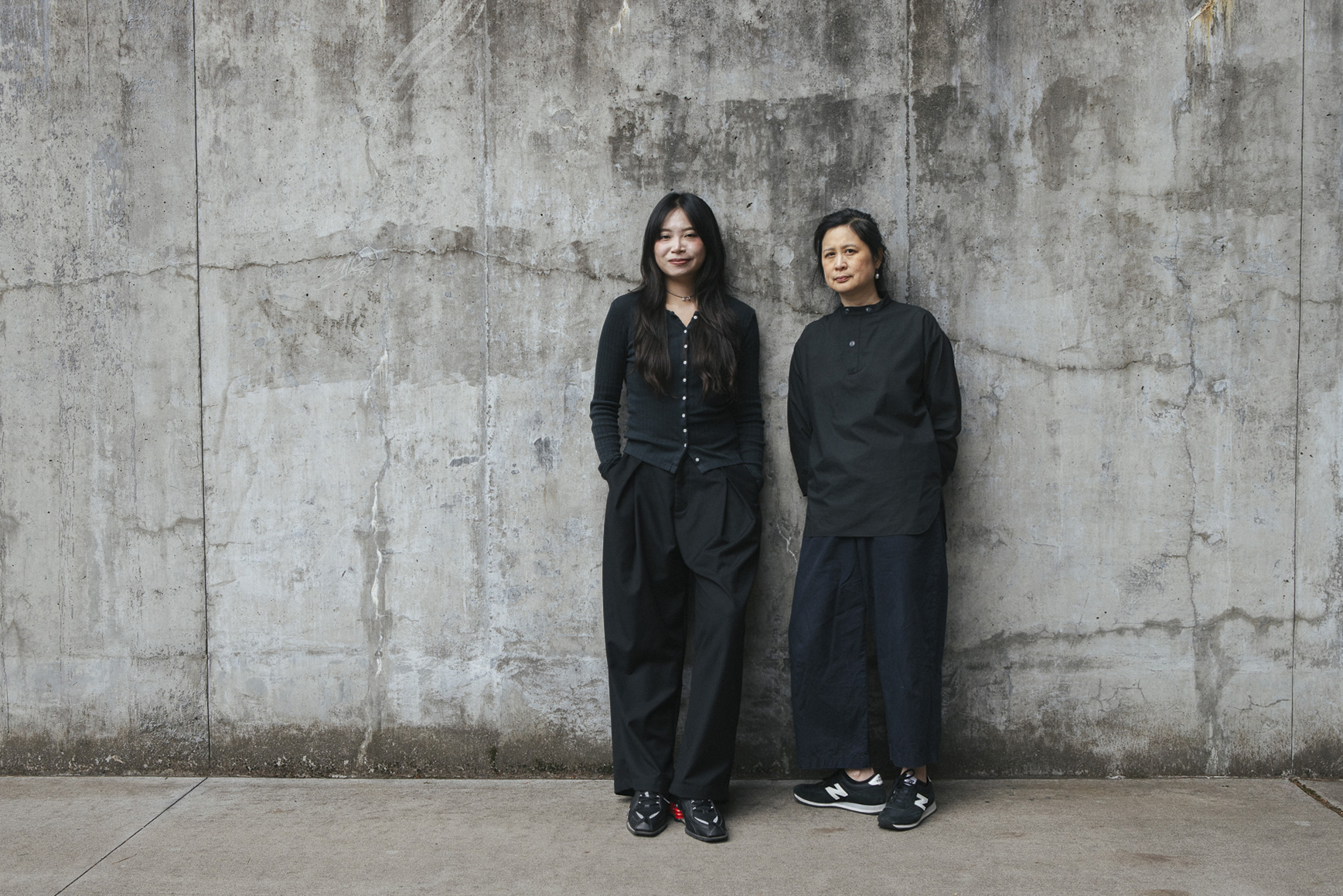
Karen Cheng, Professor of Visual Communication Design, and Li-Yuan Chiou, Master of Design candidate, have been awarded a 2026 SEED-AI grant to develop an AI-powered critique tool designed to support visual design education. SEED-AI supports innovative projects across the University of Washington that explore how artificial intelligence can enhance teaching and learning.
Design education relies on critique sessions, in which students present their work and receive feedback from peers and faculty. In large courses with 60–100 students, however, formal critique often happens only once a week, leaving limited opportunities for guidance between reviews. Addressing this gap has long been an interest of Professor Cheng. But it was Chiou’s independent research initiative during her second year in the MDes program last fall that got the project going. “Li-Yuan would listen to what I thought were casual conversations about what a critique tool might do,” recalls Cheng, “and the next week she'd show me a working prototype. That self-directed research energy is what made this grant possible.”
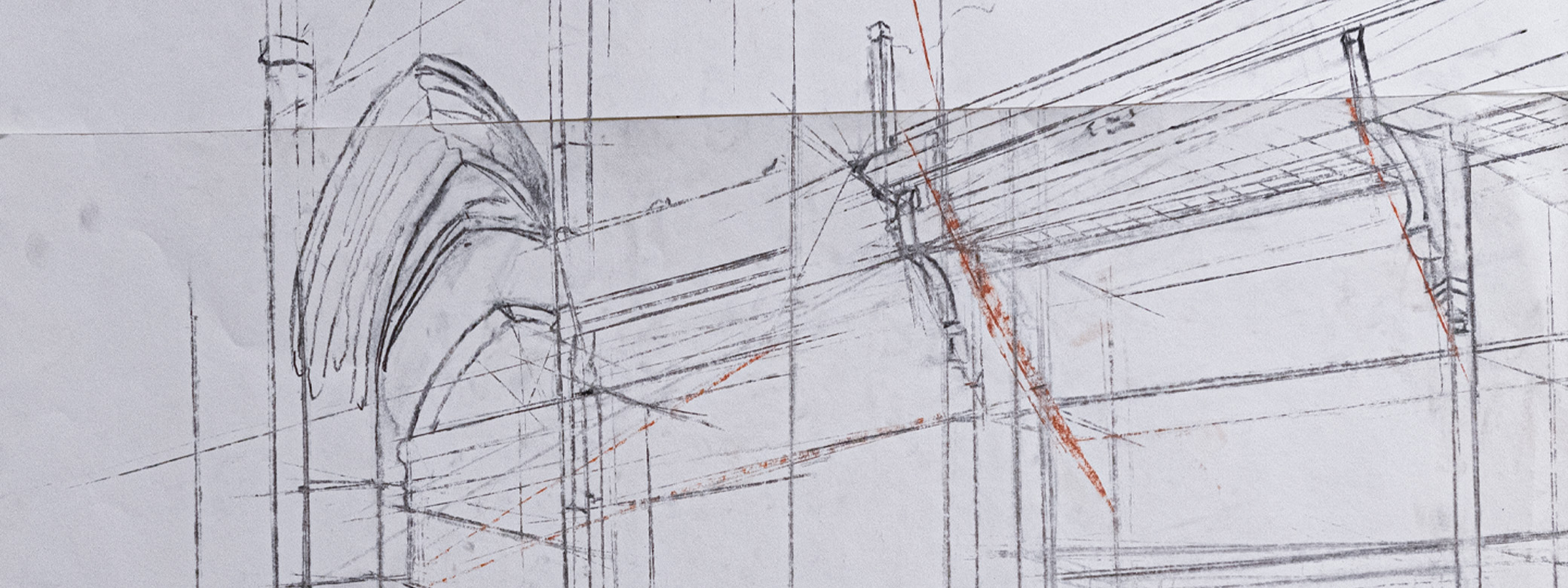
Cheng and Chiou's tool aims to fill that gap by providing visual feedback on composition. Rather than generating text-based responses like ChatGPT or Claude, it produces annotated images that show what the AI “sees”: arrows tracing visual flow, markers highlighting focal points, lines revealing axes of symmetry, and indicators of visual contrast. “When an AI says ‘your composition is too symmetrical,’ students have to figure out where that symmetry occurs,” says Cheng. “Our tool shows the symmetry axis as a visual overlay, making the feedback immediately visible.” The tool then suggests multiple revision pathways rather than prescribe a single solution, encouraging students to apply their own design judgment and creative intent.
It’s about expanding access to feedback in a discipline that has always been faculty-intensive.
Cheng emphasizes that the goal is not to replace critique or faculty instruction, but to expand access to feedback between review sessions. “This isn’t about replacing human teaching,” she says. “It’s about expanding access to feedback in a discipline that has always been faculty-intensive. If successful, this tool could help us expand design education to non-majors who need visual communication skills but can’t access our constrained-capacity courses.”
Development is underway this summer, with deployment planned as an opt-in resource in the program's Color and Composition course in Autumn 2026. The project is being supported by collaborators from industry and academia, including design alum Drew Hamlin (BDes ‘09), Director of Product Design at Meta Superintelligence Labs; Kevin Larson, Principal Researcher at Microsoft; and Chad Hall, Assistant Professor of Visual Communication Design, who researches AI collaboration dynamics and is teaching the deployment course in the fall.